
Recently, I finished Foucault’s Pendulum by Umberto Eco, a book that I read a very long time ago, in my high school days, and understood very little of at the time. I’d been putting off re-reading it for a while now due to its length (over six hundred pages) and Eco’s dense, sometimes academic style of writing, but it was so enjoyable I actually ended up breezing through it. The basic outline of the plot is that three Italian book editors, Belbo, Diotallevi, and Casaubon (the narrator) become fascinated with the strange and outlandish manuscripts sent to the vanity press they work at and decide to come up with their own conspiracy theory, “The Plan,” by feeding these manuscripts to a computer named Abulafia and reading the output. The Plan is mostly centered around the Templars, and the notion that the order secretly survived its dissolution by Pope Clement V in the early 14th century and has continued to operate in absolute secrecy to the present day.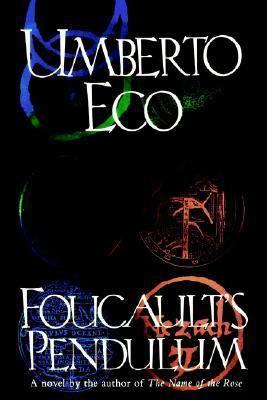
The conspiracy at the heart of Foucault’s Pendulum is, on the whole, pretty bog-standard for novels of this type. Templar myths and legends are at the center of works ranging from Dan Brown’s The Da Vinci Code and Steve Berry’s Cotton Malone series to National Treasure, but what Eco, an accomplished literary critic, does with these legends is why Foucault’s Pendulum really shines. Instead of asking, “What if the Templars survived and were secretly controlling society from behind the scenes?” Eco asks, “What if people were convinced the Templars survived, and those same people saw themselves as the heirs to the Templar legacy?” Foucault’s Pendulum is a cybernetic novel, a tale of feedback loops, where creating a conspiracy theory is enough to make the conspiracy real, or at least real enough that it becomes dangerous.
Exactly how real the conspiracy is in Foucault’s Pendulum is something that’s a bit fuzzy—we know that certain characters are involved in subterranean machinations, and we know what The Plan that the main characters invent entails, but we don’t know exactly how The Plan and the plan overlap, how much of their theory is finding the truth and how much is fiction made fact by zealots. The result is an overwhelming sense of paranoia—is this or that a coincidence, or are the shadowy forces working against the editors showing their hand? There is a pivotal scene during the denouement, after the hermetic climax but before Casaubon has his Sam Spade moment, his drawing room scene, where he wanders around Paris late at night and sees everywhere, in storefronts, street names, architecture, signs of the conspiracy around him, unable to tell where reality ends and his paranoia begins. It’s here where the themes of novel really stand out, what makes it a masterful novel.
Asides from the relationship the novel has to conspiracy theories as a whole, another thing that sets Foucault’s Pendulum apart from other seemingly similar works of fiction is the fact that, for most of it, Casaubon is a textbook armchair detective. He reads dusty books, visits archives, discusses hermeticism in dingy bars with fellow scholars, with only the prologue and the book’s final chapters involving any actual thrills or chills.
In this sense at least, Foucault’s Pendulum calls to mind Josephine Tey’s 1951 novel The Daughter of Time, an unusual mystery in which a bedridden police detective tries to solve the mystery of the princes in the Tower, Edward V of England and his brother Richard of Shrewsbury. Conventional wisdom holds the princes were murdered by their uncle, Richard III—whom Shakespeare immortalized in the play of the same name—but Alan Grant of Scotland Yard considers alternate solutions, eventually arriving at a culprit without ever leaving his hospital room. Like Foucault’s Pendulum, Tey’s novel is mostly concerned with our relationship to history: how history is written and remembered, and, more importantly, how it can become distorted.
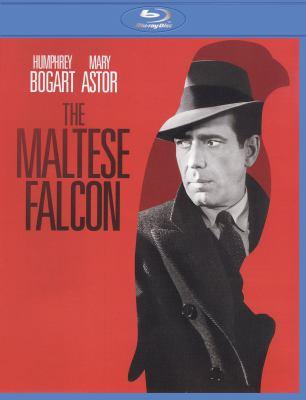 There is another mystery novel that has an interesting relationship with Foucault’s Pendulum, and it’s actually one I’ve alluded to, albeit obliquely, by way of Sam Spade: The Maltese Falcon by Dashiell Hammett, perhaps better known for its 1941 film adaptation of the same name, directed by John Huston and starring Humphrey Bogart. Eco is very self-conscious about his novel’s relationship to The Maltese Falcon, with Casaubon repeatedly comparing himself to Sam Spade, the protagonist of Hammett’s novel. Like Casaubon, Spade is an outsider thrown into a historical mystery: the ultimate fate of a gold-encrusted falcon statuette associated with the medieval Knights Hospitaller, a crusader order. Unlike Casaubon, Spade’s antagonists are not the would-be masters of the world, but two-bit crooks and grubby antiquarians out to make a buck for themselves. Also unlike Casaubon—and Tey’s Grant, for that matter—Spade is not an academic type, caring less about the provenance of the titular Falcon than avoiding murder charges for a crime he didn’t commit.
The other interesting thing about Casaubon comparing himself to Sam Spade is the way the narrative choices in their respective novels diverge and color both characters’ personalities. The Maltese Falcon is almost cinematic in its lack of interiority: no first-person perspective, no inner monologue, not even a single “Spade thought…” throughout the entire novel. We are looking at Spade’s world through a camera, albeit a camera that Spade himself holds, and while sometimes the narrative gives us little hints of what Spade thinks about the colorful cast of characters he butts heads with, up through the final moments of the novel, it’s never quite clear what’s going through the good detective’s head. Contrast this with the deep sense of paranoia that infiltrates Casaubon’s first-person narration and colors his perceptions of seemingly innocuous events and it’s easy to view Casaubon’s references to Hammett’s detective as a bit of a running joke on Eco’s part.
In the final analysis, Foucault’s Pendulum, insofar as it is a thriller, is one that’s hard to pin down convincingly, partly because it’s so far removed from the standard thriller fare of cops and robbers, and partly because Eco writes with a level of irony about his subject matter: Eco knows the Plan is a farce, while Hammett, for all his other virtues, doesn’t seem to feel the same way about the Falcon.
Other books by:
Shelby S.