
Romance is a complicated thing. You know the gist of it all: people drawn together by some attraction. But that’s not the whole story; that’s a fragment of it, and the beauty is in the telling.
Romance is an umbrella, wide like a rainbow, that encompasses so many different things: the tropey and the raunchy and the bittersweet and even the tragic. Sometimes a romance makes you cry because of how sad it is; at the same time, you could have a very similar reaction from a happily ever after that’s noble and true enough.
This blog post is about two romances—both films, both noble and true—that moved me profoundly, and that I hope will do the same for you: Brokeback Mountain and In the Mood for Love.
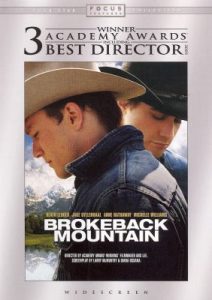 Brokeback Mountain is a film that looms large in the American imagination, a gay film that achieved mainstream relevance when very few had, even if that relevance was more like infamy—think, for example, Owen Wilson in Night at the Museum repurposing Jake Gyllenhaal’s heartbreaking line, “I wish I knew how to quit you,” as a throwaway gag. Directed by Ang Lee (Crouching Tiger, Hidden Dragon; Sense and Sensibility) and based on a novella by Annie Proulx, this film follows two cowboys, Ennis (Heath Ledger) and Jack (Gyllenhaal), who find unlikely love while herding sheep on the titular Brokeback Mountain. Both men are closeted and married to women, and they meet only sporadically throughout their decades-long relationship, the secretive and taboo nature of which leads to conflict with their employers, wives, and ultimately between the two men themselves.
If you hadn’t guessed, Brokeback Mountain does not have a happy ending—indeed, it’s heart-wrenching, among the saddest I’ve ever seen, and also among most compelling. It’s a tale of forbidden love, where irrepressible desire crashes up against societal mores and blooms, if only for a moment.
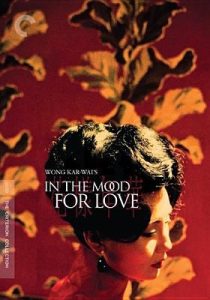 In the Mood for Love is more obscure in the West, in part because foreign-language films present a high barrier to entry for many filmgoers, but it is no less excellent than Brokeback Mountain. This 2000 Cantonese-language film directed by Wong Kar-Wai stars Tony Leung as Chow and Maggie Cheung as Mrs. Chan, neighbors in 1960s Hong Kong who discover their spouses are having an affair with each other. They meet in the secret to commiserate, to try to understand what makes someone have an affair, and slowly, without meaning to, find themselves falling in love. Yet a strong sense of duty prevents them from consummating this love; despite the palpable tension between Chow and Chan, they don’t share a single kiss throughout the entire runtime. What we get instead is yearning, pure and simple, in a way that only Wong Kar-Wai can do—this is not a “will they or won’t they?” film, but a film about two people who know what they want more than anything else in the world but can’t bring themselves to act on it.
Asides from the obvious differences in language and culture, the primary way that Brokeback Mountain and In the Mood for Love differ is atmospheric. Brokeback Mountain takes place in the desolate American West. Outdoor scenes are dominated by vast expanses of space—plains, mountains, forest—where often Jack and Ennis are the only people for miles around. In contrast, In the Mood for Love is set in one of the most densely-populated cities in the world. Chow and Chan are both lodgers, which produces friction in the plot—having to sneak around the nosy old women they live with, even though they’re not doing anything wrong. The only truly private moments they share are in the back of cabs and in a hotel room where they work on martial arts stories together.
Despite this, the effect produced by Brokeback Mountain’s vastness and In the Mood for Love’s claustrophobia is the same: isolation. Not in a self-absorbed sense, but more as a way of setting the scene for intense character study: who are these star-crossed lovers? What do they want? And, most importantly, the question that stays with you long after the credits roll: Why won’t they let themselves have it?
What to watch and read
Lonesome Dove by Larry McMurtry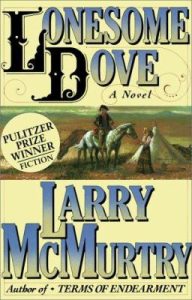
I have to admit that Lonesome Dove is, in many ways, a bit of a softball—originally, I planned on giving this McMurtry’s Pulitzer Prize-winning western epic equal attention as In the Mood for Love and Brokeback Mountain, but ultimately, I felt that Lonesome Dove deserved a deeper reading than I was able to give it for me to do it justice. This novel, which follows a cattle drive from South Texas to Montana, is a profound exploration of love, especially unrequited love.
As an aside, McMurtry was one of the screenwriters on Brokeback Mountain, alongside Diana Ossana, who also collaborated with McMurtry on the television adaptation of Lonesome Dove starring Tommy Lee Jones and Robert Duvall.
The Wedding Banquet, dir. Andrew Ahn.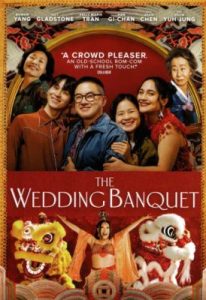
This 2025 romcom is a remake of a 1993 film of the same name by Ang Lee. Like the original, it stars a young Asian American gay man (Youn Ja-Yong) man who fakes a marriage to a woman (Kelly Marie Tran) to appease his conservative family. Things quickly, and rambunctiously, get out of hand. While more lighthearted than some of the other films discussed here, it explores themes of familial love and duty.
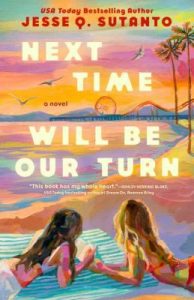 Next Time Will be Our Turn by Jesse Q. Sutanto
Sutanto’s Next Time Will be Our Turn is a dual-timeline story about the wealthy Chinese-Indonesian Chen family scandalized by matriarch Magnolia showing up to the annual Lunar New Year celebration with a beautiful woman on her arm. Magnolia tells her granddaughter Izzy (the black sheep) how she met the love of her life: not Izzy’s grandfather, but an American girl named Ellery. Like the other works discussed here, Next Time Will be Our Turn is heartbreaking, but it’s also a profoundly optimistic and hopeful work.