
Fall is almost upon us, but I’ve been trying to get a head start by reading recent horror releases, as well as catching up on Stephen King’s back catalogue (the jury is still out for It). There have been a lot of great horror novels published this year, including works by heavy hitters like Stephen Graham Jones and Caitlin Starling, but what I’d like to talk about here is Daisy Pearce’s Something in the Walls.
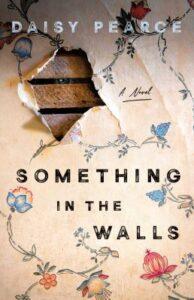 Pearce’s latest novel, Something in the Walls is a book I will carry with me for a long time. It is very rare for a horror novel to give me genuine chills, to keep me up at night—and it’s even rarer for any book to harrow me. Something in the Walls is an ordeal, something I had to force myself to get through. I wouldn’t say I liked the novel, but I did love it.
Before I get any further, it is important to note that Something in the Walls is a very dark book that deals with very dark themes (including, but not limited, to child abuse) and it’s not necessarily something I would recommend to the faint of heart. Use your own best judgments before picking up any of the books mentioned in this blog post.
Something in the Walls is, on the surface, a story about a haunting. Set in early 90s England—mostly Cornwall, though the opening chapters take place in London—it follows an unseasoned child psychologist, Mina (after Harker, nee Murray, of Dracula fame), who meets tabloid journalist Sam at a support group for people dealing with grief; Sam subsequently talks Mina into providing a psychological assessment for Alice, a teen girl in a remote hamlet who claims to be possessed by a witch, as part of a story his paper is running.
It is very clear from the start that, despite their protestations, Sam and Mina are not impartial observers. Both want the haunting to be real because of their own unresolved issues around deceased loved ones—for Sam, his infant daughter; for Mina, her younger brother, who drowned when they were both teens. At certain points in the novel, each lets their fear get the better of them, behaving irrationally in the face of supernatural goings-on that, in theory, they ought to be working to discredit, as when they go to investigate the abandoned cottage where Alice became possessed. At the cottage, Mina becomes convinced that they’re walking into a witch’s trap, and both adults end up fleeing in terror.
It would be altogether too silly to act like characters getting scared is a great aberration in a horror novel, but it’s very well-executed here—almost infectious, in fact. I can’t speak for everyone, but I know that there have been moments in my life, in the woods at night, in a darkened hallway, a crawlspace, where fear I didn’t know was there built up until I found myself, without forewarning, turning tail but not understanding why. This passage conjured up those moments for me in a way rarely seen in fiction.
A large part of why this scene is so effective is Pearce’s mastery of first-person perspective: we have unfiltered access to Mina’s thoughts, irrational as they are, so we can share her fear—and more importantly, her irrationality—in a way that isn’t accessible from a less personal point of view. Pearce uses this stylistic choice throughout the novel to great effect, giving us front-seat tickets to Mina’s downward spiral, and Mina spirals hard. The second half of the novel shifts the focus away from Alice’s possession to Mina’s worsening mental state as she uncovers dark secrets about the small Cornish village where the action takes place and her own traumatic memories of her brother’s death resurface.
The last third of the novel comes fast and hard like a freight train as Mina hits rock bottom: even when you think she’s can’t go lower, she does, and this downward trajectory leads to not one, but two attempted exorcisms and a final series of revelations that manages to outdo even what’s come before. Bacchanal is maybe the best word for it, with its connotations of pagan creeds outworn, and more importantly, mystery and initiation. If you can stomach it, Something in the Walls is definitely worth a read.
More like Something in the Walls
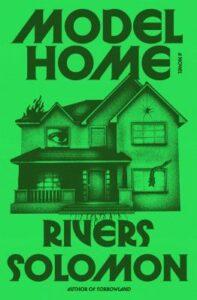 The closest point of reference for me would be Rivers Solomon’s Model Home, another atypical horror novel that shares with Something in the Walls similar subject matter and a jaw-dropping finale. Set primarily in a wealthy (and mostly white) Dallas suburb, it follows three African-Americans siblings as they deal with the aftermath of their parents’ sudden and suspicious deaths and the dark, seemingly supernatural events that pockmarked their childhoods and left each with scars both physical and mental.
Here in the Dark 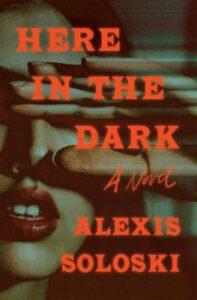 by Alexis Soloski is a psychological thriller about a theater critic, Vivian Perry, who sits for an interview with an aspiring playwright. When the playwright disappears and Perry is the last person to have seen him alive, the playwright’s distraught fiancée ropes Perry into an informal missing persons investigation. The more she digs into the playwright, though, the less clear the facts become, and Perry’s grasp on reality slowly begins to slip, slow and then fast, leading to an apocalyptic conclusion.
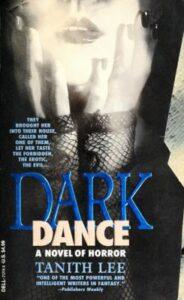 Lastly, I would be remiss if I did not bring up Tanith Lee’s Dark Dance. Unlike Model Home or Here in the Dark, Dark Dance leans much more into its Gothic elements—more so than even Something in the Walls—as it tells a rather unconventional vampire story centering on the Scarabae clan and their warped view of what it means to be a family. Unlike the other novels mentioned here, it’s a slow-burn through-and-through, with the horror not stemming from cheap scares but an oppressive, claustrophobic atmosphere that builds and builds as protagonist Rachaela realizes the hopelessness of her situation. Like Something in the Walls, Dark Dance isn’t for the faint of heart, but if you’re feeling brave, there are very few novels I could recommend as highly.
Shelby S.