

So many great authors have birthdays in February. To pare the list down, this month we’ll focus on a few folks who have won the Pulitzer Prize. We’ll start with what the Pulitzer is, because, let’s be honest, although we get the prestige, do we really know much about it?

Joseph Pulitzer
In the early 1900s, Joseph Pulitzer, respected Hungarian-born journalist and publisher, established and endowed the Pulitzer Prize to encourage excellence in “public service, public morals, American literature, and the advancement of Education,” especially in journalism. Beyond this, the criteria for the Pulitzer is not strictly defined. In 1917, prizes were awarded in two areas: Journalism (Reporting and Editorial Writing), and Books, Drama, and Music (History and Biography). The categories have expanded and changed over the years — in 2024, prizes were awarded in twenty-three categories including Public Service and Feature Photography — but the original areas have remained the same. Special Citations are also awarded as determined by the board
Read on for tidbits about our birthday authors, their Pulitzer Prize-winning books, and links to help you access them via Rogers Public Library.

James Michener
James A. Michener (Feb 3, 1907-1997)
 Genre: Historical Fiction
Themes: History, Culture, The Human Condition
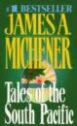
1948 Pulitzer Prize in Fiction for Tales of the South Pacific
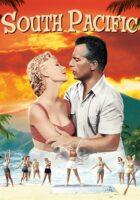
James Albert Michener was abandoned as an infant and raised by Mabel Michener, an impoverished widow who imbued her adopted son with a love of literature and music. His adolescence and young adult years were filled with exploring the world through study (Swarthmore College), hoboing during the Great Depression, and many other low-budget travel experiences. He was a U. S. Navy serviceman in the Pacific Theater during WWII. From these experiences and others grew more than 40 books, several of which are epic sagas running to over 1,000 pages. Some were adapted as movies and mini-series. Notable among these is 1948 Pulitzer Prize winner in Fiction: Tales of the South Pacific. This collection of short stories set during WWII was adapted for Broadway by Rodgers and Hammerstein and entitled South Pacific. It was later produced as the 1958 film and again as a TV movie in 2001.
-
- South Pacific (hoopla)
-
- Centennial
-
- Hawaii (Overdrive Audiobook)
-
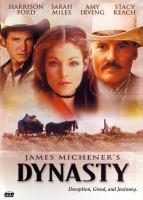
- Dynasty (DVD)
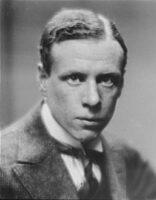
Sinclair Lewis
Sinclair Lewis (Feb 7, 1885-1951)
 Genre: Satire, Social Realism
Themes: The American Experience, Society, and Culture (especially materialism & consumerism)
1926 Pulitzer Prize in Novel (now Fiction) for Arrowsmith (Refused)
Harry Sinclair Lewis was born and raised in “Small Town, USA,” but these modest beginnings did not keep him from being involved in a major Pulitzer controversy. His satirical treatment of his hometown, Main Street, was recommended for a Pulitzer in 1921, but was rejected as not meeting the “wholesomeness” criteria. In 1922, his novel Babbitt was passed by, reportedly under taint of Main Street. In 1926, however, Arrowsmith was unanimously chosen. Lewis responded by refusing the prize due to the “Main Street robbery.” Four years later, he did accept the Nobel Prize in Literature as the first writer from the United States to receive the award. The reasoning for the award was “his vigorous and graphic art of description and his ability to create, with wit and humor, new types of characters.”
-
- Main Street (hoopla ebook)
-
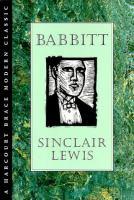
- Babbitt
-
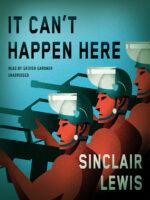
- It Can’t Happen Here (Overdrive Audiobook)
-
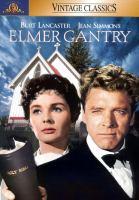
- Elmer Gantry (DVD)
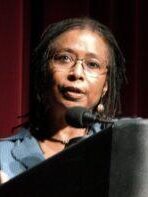
Alice Walker (photo by Virginia DeBolt)
Alice Walker (Feb 9, 1944)
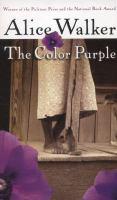 Genre: Lyric Realism
Themes: African American Life and Culture, Racism, Sexism
1983 Pulitzer Prize in Fiction for The Color Purple
It is not surprising to find Alice Walker, activist and author, on the list of Pulitzer Prize winners. The prize’s intent is to recognize excellence in writing that focus on American life. In 1983, Walker broke boundaries, becoming the first African-American woman to win this prestigious award. Her tenacity and conviction, combined with her experiences at Spelman and Sarah Lawrence Colleges, equipped her for her work in the “real-world” of Civil Rights, as well as in the creation of fictional and poetic work where these concerns are just as fiercely represented.
-
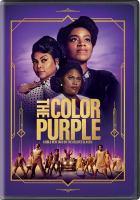
- The Color Purple (2024 DVD)
-
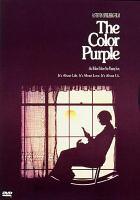
- The Color Purple (1997 DVD)
-
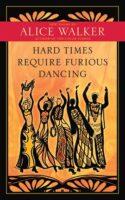
- Hard Times Require Furious Dancing (hoopla eBook)
-
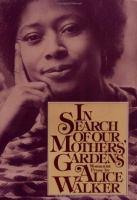
- In Search of Our Mothers’ Gardens
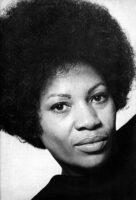
Toni Morrison
Toni Morrison (Feb 18, 1931-2019)
 Genre: Literary Fiction
Themes: The Black American Experience, Identity, Relationships
1988 Pulitzer Prize in Fiction for Beloved
Toni Morrison’s parents and education were powerful shapers of her literary expression. From early exposure to African-American folktales, music, and other cultural elements, to high school involvement with debate and drama, her youth supplied many opportunities to develop her artistic sensibilities and skills. A university education pursued at Howard University and, later, Cornell, further prepared her for her career as an editor, teacher, and writer. Morrison’s Pulitzer-winning novel, Beloved, melds the harsh realities of the Black American experience with the ghost stories of her childhood to shine a light on relationships and physical, emotional, and generational trauma, particularly as it relates to slavery. Morrison’s body of work also brought her the first Nobel Prize awarded to a black woman of any nationality. The prize motivation: “who in novels characterized by visionary force and poetic import, gives life to an essential aspect of American reality.”
-
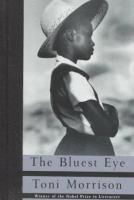
- The Bluest Eye
-
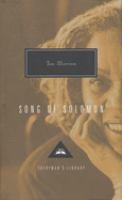
- Song of Solomon
-
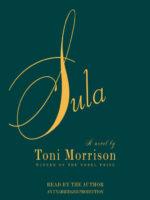
- Sula (Overdrive Audiobook)
-
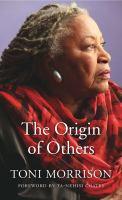
- The Origin of Others
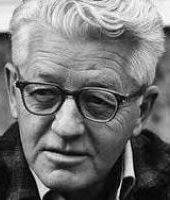
Wallace Stegner
Wallace Stegner (Feb 18, 1909-1993)
 Genre: Historical and Environmental Non-Fiction and Fiction
Themes: Conservation, Community, Relationships American National Identity
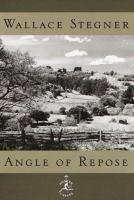
1972 Pulitzer Prize in Fiction for Angle of Repose
Wallace Stegner may not have had quite as broad a reputation as the other authors in this list, but he influenced areas that, since his heyday, have moved from a somewhat niche area of interest to one of international importance: conservation and the environment. He wrote about the American West, but he didn’t write cowboy westerns. As shown in Angle of Repose, Stegner’s Pulitzer-winning novel, his American Identity covered more than how Americans interacted with one another, individually, socio-politically, and historically, but how they co-existed with the natural world around them.
-
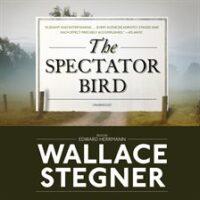
- The Spectator Bird (hoopla Audiobook)
-

- Crossing to Safety (hoopla Audiobook)
-
- The Women on the Wall
-
- On Teaching and Writing Fiction
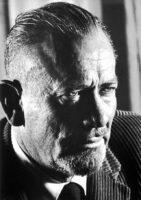
John Steinbeck
John Steinbeck (Feb 27, 1902-1968)
 Genre: Social Realism, Historical Fiction
Themes: The Human Condition, Social Justice, and a variety of flavors of “Nature”
1940 Pulitzer Prize in Novel (now Fiction) for The Grapes of Wrath
Another writer of the American West, John Steinbeck set many of his stories in central California where the author was born and raised. The area and its people deeply influenced his writing, as did a variety of work experiences from agricultural laborer to tour guide, making plaster mannequins, and time as a war correspondent during WWII. His friendship with marine biologist and philosopher Ed Ricketts added to the ecological elements of his writing as well. Steinbeck’s Pulitzer Prize winner, The Grapes of Wrath, so powerfully, unflinchingly, and lyrically represents his favorite themes that it remains a standard in the classroom and on must read lists alike. Steinbeck won the Nobel Prize in Literature in 1962 “for his realistic and imaginative writings, combining as they do sympathetic humour and keen social perception.”
-
- The Grapes of Wrath (blu-ray)
-
- East of Eden
-
- East of Eden (DVD)
-
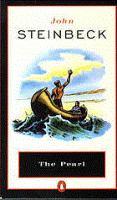
- The Pearl
-
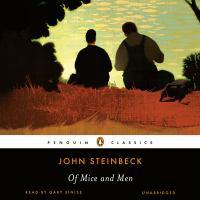
- Of Mice and Men
Sources
The Pulitzer:
Seymour Topping, Sig Gissler and Sean Murphy. “History of the Pulitzer Prizes.” Accessed January 29, 2025. https://www.pulitzer.org/page/history-pulitzer-prizes.
James A. Michener:
O’Reilly, Elizabeth.Michener, “James A. (James Albert), 1907-1997.” Ann Arbor: ProQuest, 2011. https://www.proquest.com/encyclopedias-reference-works/michener-james-albert-1907-1997/docview/2137914458/se-2.
“James A. Michener.” Wikipedia, last modified December 26, 2024. https://en.wikipedia.org/wiki/James_A._Michener.
Sinclair Lewis:
“Lewis, Sinclair, 1885-1951.” Ann Arbor: ProQuest, 2008. https://www.proquest.com/encyclopedias-reference-works/lewis-sinclair-1885-1951/docview/2137910007/se-2.
Weissberg, Claudia Stone. “Sinclair Lewis, ‘the Main Street burglary’ and a rejection notice.” Accessed January 29, 2025. https://www.pulitzer.org/article/sinclair-lewis-main-street-burglary-and-rejection-notice.
“Sinclair Lewis.” Wikipedia, last modified January 21, 2025. https://en.wikipedia.org/wiki/Sinclair_Lewis.
Alice Walker:
Mambrol, Nasrullah. “Analysis of Alice Walker’s Novels.” June 27, 2018. https://literariness.org/2018/06/27/analysis-of-alice-walkers-novels/
“Alice Walker.” Wikipedia, last modified January 6, 2025. https://en.wikipedia.org/wiki/Alice_Walker.
Toni Morrison:
“Toni Morrison.” Wikipedia, last modified January 11, 2025. https://en.wikipedia.org/wiki/Toni_Morrison.
“Toni Morrison – Facts.” NobelPrize.org, accessed 23 Jan 2025. https://www.nobelprize.org/prizes/literature/1993/morrison/facts/).
Waudby, June. “Morrison, Toni.” Ann Arbor: ProQuest, 2010. https://www.proquest.com/encyclopedias-reference-works/morrison-toni/docview/2137913882/se-2.
Wallace Stegner:
“Stegner, Wallace Earle, 1909-.” ProQuest, Ann Arbor, 2011. https://www.proquest.com/encyclopedias-reference-works/stegner-wallace-earle-1909/docview/2137893891/se-2.
“Edward Abbey, Wallace Stegner and the rise of modern Western nature writing.” New Mexico State Library, March 17, 2015. https://nmstatelibrary.org/edward-abbey-wallace-stegner-and-the-rise-of-modern-western-nature-writing/.
John Steinbeck:
McAuley, Jenny. “Steinbeck, John, 1902-1968.” ProQuest, Ann Arbor, 2012. ProQuest, https://www.proquest.com/encyclopedias-reference-works/steinbeck-john-1902-1968/docview/2137893704/se-2.
“The Nobel Prize in Literature 1962.” Accessed January 29, 2025. https://www.nobelprize.org/prizes/literature/1962/summary/.
“John Steinbeck.” Wikipedia, last modified January 21, 2025. https://en.wikipedia.org/wiki/John_Steinbeck