

Drive My Car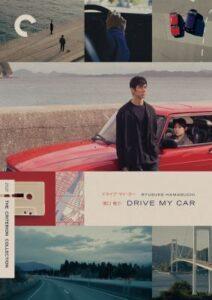 is a 2021 film by Ryusuke Hamaguchi that adapts a Haruki Murakami story of the same name from his 2014 collection Men without Women. The plot is deceptively simple—Kafuku, a director grieving over the death of his wife, is hired to direct a multilingual production of Anton Chekhov’s Uncle Vanya. Due to insurance reasons, his employers hire a driver for him (despite his wishes) and he ends up bonding with the younger woman over their shared grief of lost loved ones. The simple synopsis, however, belies the complexity of the tale that arises from both Hamaguchi’s artistic decisions and the ways that Drive My Car interacts with Uncle Vanya.
To start with, though, it’s worth pointing out that the production of Uncle Vanya plays a much larger role in the film’s plot than it does in the source material. Murakami’s story is just over 40 pages and required padding to become a three-hour film. Part is lifted from another story in Men without Women, “Scheherazade,” including a memorable ten-minute conversation between Kafuku and an actor who had an affair with his wife before her death.
Within the short story, Kafuku is only acting in and not directing a production of Uncle Vanya. We don’t actually see this production, but we’re told that Kafuku is playing the titular role of Uncle Vanya. A little while later, the driver, Misaki, compares herself to Sonya: “My features are plain, that’s all. Like Sonya’s” (Murakami, 2017, p. 36). Just as Vanya plays a paternal role to Sonya in Chekhov’s play—standing in for her biological father Serebryakov while he teaches in Moscow—so does Kafuku for Misaki. This relationship is further expanded in the film when Kafuku and Misaki drive from Hiroshima to Hokkaido (approximately 36 hours by Google Maps’ estimation) for the two to reach closure around the deaths of their loved ones—Kafuku’s wife, Misaki’s mother—which both feel some degree of responsibility for.
It is a little facetious to boil down Vanya and Sonya in Uncle Vanya to father and daughter; it may be more accurate to say that they bond through their shared misery. Both are neglected by their patron, languishing on a country farm while Serebryakov is living the high life with his second wife. Vanya says as much with his “I could have been a Schopenhauer or Dostoevsky” (a line we hear again in Drive My Car) and Sonya gives a much heartrending intimation during her “What can we do?” monologue, but here she also responds to Vanya with a message of hope, a promise of peace and rest in a life to come. There’s a direct parallel between Sonya’s “We must live our lives” and Misaki’s “All I can do is…try to get on with my life” (Murakami, 2017, p. 40). Sonya’s monologue is the final scene of Uncle Vanya, and it’s easy to see why—a play as miserable as this one, complete with an attempted murder-suicide, needs a silver lining.
The monologue also provides emotional resolution to Drive My Car, although it isn’t quite the final scene (there’s a short epilogue after). Here we watch Park Yoo-rim as Lee Yoo-na as Sonya perform the scene in Korean Sign Language with Kafuku as Vanya speaking his lines in Japanese. Throughout the scene, the camera cuts to Misaki in the audience, as if she needs to hear Sonya’s message of hope as much as Vanya does.
This scene also brings to light the major adaptational change between Hamaguchi’s film and Murakami’s short story, the multilingual aspect of Uncle Vanya—something that, at least diegetically, is Kafuku’s own artistic choice as director of the play. It simply isn’t present in the source material, and we have to wonder what it adds to the story.
The first thing to note is that Chekhov’s play is already in translation. The playwright wrote in Russian, Kafuku performs in Japanese, and we as the audience have that filtered into English via subtitles—again, sometimes diegetically, with parallel texts projected behind the stage performances. The multilingual production at the center of Drive My Car brings this tension to the forefront and highlights the ways that the characters talk past each other—sometimes literally, as when the Korean interpreter-qua-dramaturge Lee Gong Yoon-soo acts as an intermediary for Kafuku and his performers.
More broadly, characters in Drive My Car often fail to communicate: Kafuku is unable to speak about his wife’s infidelities until after her death, and when he does confront the young actor with whom she had an affair, both parties dance around the facts. Likewise, Misaki is extremely reticent to share her inner thoughts—when she receives compliments at a dinner with Kafuku and Lee Gong, her response is to leave the table and play with Lee Gong’s dog. In another film, we might imagine that the reserved Kafuku and Misaki would never communicate at all, bottling it up through the long, long days and through the long nights, neither resolving the grief they feel.
What allows their relationship to develop the way it does in Drive My Car is Kafuku’s red Saab, and the way that driving allows for and even cultivates a certain degree of silence in a way that many other activities don’t. Within the transitory space the car provides, they’re each allowed to awkward and only open up to each other gradually over the course of road trips and rehearsals naturalistically (fitting, considering Chekhov’s own tendencies towards naturalism).
In a real and tangible way, this relationship is at the center of what I loved about this film—the way that it is comfortable not saying anything, comfortable using silence and inaction to create tension, and only gradually accumulates meaning over its runtime. It very much mirrors the experience of getting to know someone over a long road trip: not all at once, and sometimes without even meaning to.
All that said, Drive My Car is definitely not an easy film to get through. As mentioned above, it’s about 3 hours long and subtitled (which by itself can demotivate people who aren’t already used to foreign films). If you want to watch something with a little more heft, that requires careful consideration and gives you lots of little rabbit holes to fall down, I can’t recommend this film enough.
The opening scenes of Drive My Car contain some sexually explicit material. There is also drinking and smoking, an off-screen murder, as well as discussions of child abuse and infidelity. Unrated.
If you liked Drive My Car, you might also want to watch…
Uncle Vanya: This one goes without saying. RPL doesn’t currently have a copy but we’re working on it! You can check out the stage play, though.
Stranger Than Paradise: Proto-mumblecore road film
Shoplifters: Japanese film about a family of shoplifters that shares thematic similarities with Drive My Car.
Amador: Intergenerational friendship between a young woman and the elderly man who hires her as a caretaker. Spanish-language.
Tokyo Story: Set in post-war Tokyo, this cinematic classic deals with the complicated relationships between parents and child