

We are entering into the festive holiday season! November has several interesting observances and many author birthdays. To pare down the list of the latter, let’s filter it through the former. Check out these four November-born authors who represent November observances.
Julie Murphy (Nov 8, 1985; Bridgeport, CT)
Characteristics: Accessible, relatable, humorous
Themes: Empowerment, self-acceptance, coming of age
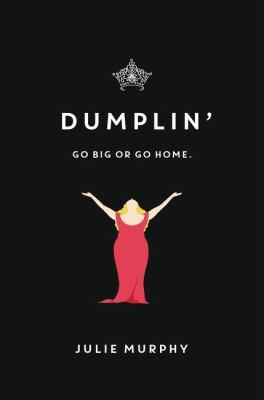
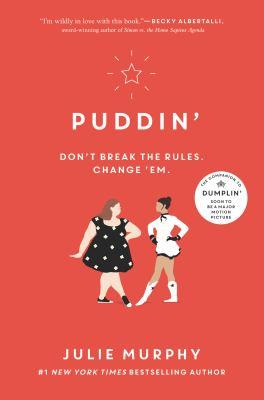
NaNoWriMo may be defunct, but it’s 26 years of supporting authors gave rise to some best sellers. One of these is Julie Murphy. Before her writing career took off, she worked in a public library. Her experience there inspired and informed her authorial endeavors. Her first novel Side Effects May Vary was a NaNoWriMo book which grew from a conversation Murphy had with a teen group she worked with at the library. Dumplin’ was her first New York Times Best-Selling book. It has garnered praise for its honesty and authenticity, for challenging stereotypes, and for promoting body positivity.
Dumplin’ – “All the best things in my life have started with a Dolly Parton song.”


Influenced by Julie Murphy: Crystal Maldonado – Try Fat Chance, Charlie Vega
Kurt Vonnegut (Nov 11, 1922; Indianapolis, Indiana)
Characteristics: Non-linear, darkly humorous, satirical dystopian sci-fi
Themes: War, absurdity, free will
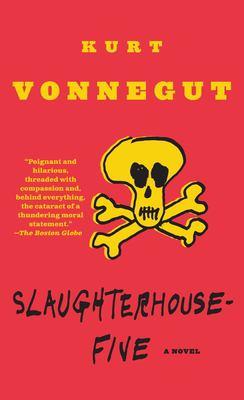
Kurt Vonnegut shares his birthday with Veteran’s Day. This is an intriguing coincidence as many of his books relate directly or indirectly to war. He enlisted in the Army in 1942, and his traumatic experiences in WWII deeply influenced his worldview and his work as an author. Vonnegut was held for five months as a prisoner of war. During this time he was housed underground in Dresden, Germany, experiencing the horror of the city’s bombing and its aftermath firsthand. Vonnegut draws heavily on this experience for his novel, Slaughterhouse-Five, widely considered his masterpiece. To be clear, Vonnegut does not present a glorified picture of war. Quite the contrary. This, in part, has earned him a place on many a challenged and banned books list. It has also established him as a powerful counter-culture voice, challenging blind adherence to the status quo and encouraging honest examination of social strictures.
Slaughterhouse-Five – “All this Happened, more or less.”
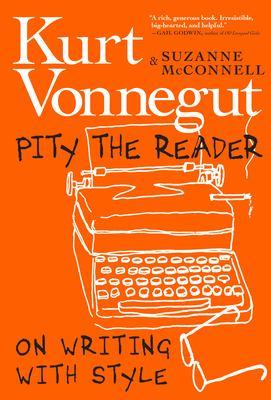

Influenced by Kurt Vonnegut: Haruki Murakami – try Wind/Pinball (two short novels – Hear the Wind Sing and Pinball, 1973)
Fyodor Dostoyevsky (Nov 11, 1821; Moscow, Russia)
Characteristics: complex characters, realism, psychological and philosophical exploration
Themes: Human suffering, existentialism, faith, redemption
Thanks to his fabulous facial hair, Fyodor Dostoevsky represents Movember. It seems doubly appropriate considering the author’s interest in psychology. Born exactly 101 years before Kurt Vonnegut, Fyodor Dostoevsky engages with many of the same concerns as the younger author – free will, morality, and human suffering to name a few. The two authors diverge in their view of the state of humanity with Dostoevsky ultimately being more hopeful, based on a belief in the potential for redemption, while the humanist Vonnegut skews toward skepticism and resignation. Interestingly, these two viewpoints each grew from traumatic experiences. Dostoevsky was arrested in 1849 as member of a utopian socialist group during the closing years of Tsar Nicholas’s reign. He was then subjected to a mock execution and sent to Siberia under a sentence commuted to hard labor. During this time in Siberia, his views underwent a major shift from western skeptical liberal socialism to a mystical Slavic nationalism leading to a deep affiliation with Russian Orthodoxy. These views and Dostoevsky’s interests in human suffering, psychology (insanity), and redemption blend powerfully in Crime and Punishment, a story heavily influenced by a murder that took place while he was writing it and the author’s earlier experience in Siberia. The novel became arguably his most famous and widely read.
Crime and Punishment – “On an exceptionally hot evening early in July, a young man came out of the garret in which he lodged in S. Place, and walked slowly, as though in hesitation, towards K. bridge.”
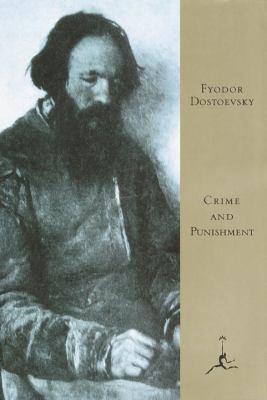
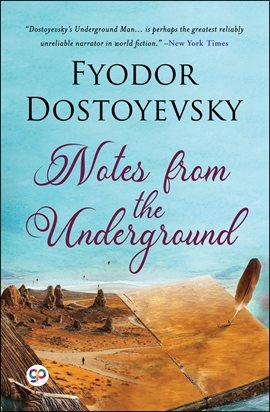
Influenced by Fyodor Dostoevsky: Franz Kafka – Try The Trial
James Welch (Nov 18, 1940; Browning, Montana)
Characteristics: Spare, poetic, emotional, symbolism
Themes: Native American experience, connection to land, survival, identity
James Welch is representing Native American Heritage Month. Welch was not a prolific author, but he was a respected voice of the Native American Renaissance and has influenced other Native American authors including Sherman Alexie, Louise Erdrich, and Stephen Graham Jones. Welch’s parents were of Blackfeet and A’aninin (aka Gros Ventre) ancestry. They raised their son with a connection to and understanding of their indigenous traditions and culture. His childhood experiences on the Blackfeet and Fort Belknap reservations in Montana and knowledge of western history were fundamental to his writing. His first book Winter in the Blood was well-received with one reviewer calling it “nearly flawless.” His prize-winning third novel, Fools Crow, continued the tradition of critical acclaim. His work was internationally recognized, with the author being named a knight of the Order of the Arts and Letters by the French Ministry of Culture in 1995.
Fools Crow – “White Man’s Dog raised his eyes to the west and followed that Backbone of the World from south to north until he could pick out Chief Mountain.”

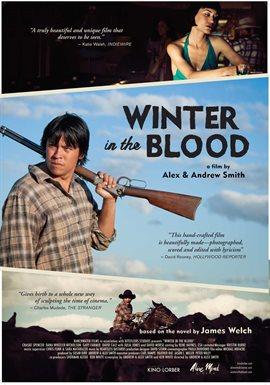
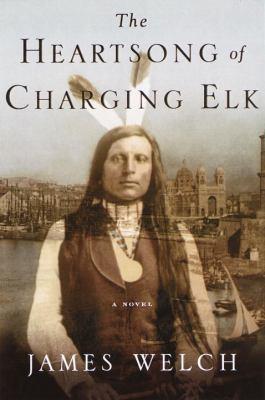

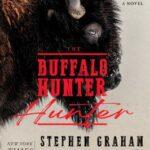
Influenced by James Welch: Stephen Graham Jones – Try The Buffalo Hunter Hunter