
Recently I started watching the television series True Detective starring Matthew McConaughey and Woody Harrelson. The first season came out in 2014 and is an absolutely phenomenal piece of television, and the only excuse I can give for not having watched it previously is I was in college when it came out and (unfortunately) not being able to devote a lot of time to silly little things like genre-bending detective tel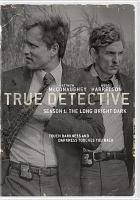 evision.
Genre-bending really is the operative phrase here, and it’s going to be doing a lot of heavy lifting in this blog post. But first, a note: as the cataloger here at Rogers Public Library, I have to think about genres a lot professionally, as a big part of my job is looking at genre headings on bibliographic records—lots and lots of genre headings. Sometimes it’s a simple matter of just verifying the genre terms that someone else has attached, but often I have to skim through an item or read reviews to get a sense of what kind of story it is, and to a certain extent this professional obligation has spilled over to what I read and watch and play in my leisure time.
Naturally, then, as I watched the first season of True Detective, I found myself being drawn to the way that it plays with different genre conventions. On the most basic level, as the plot is driven by the identification of a serial killer, it is a mystery, and we could further categorize it as a police procedural or a psychological thriller—dealing with both the psychological toll that police work takes on the two main detectives, as well as the criminal psychology that leads someone to commit the gruesome murders depicted. But at moments there seem to be other genres malingering under the surface: horror, paranormal, whatever you want to call it, all connected by one of the sources of inspiration for the series: Robert W. Chambers’ The King in Yellow (1895).
The first season of True Detective is full of references and allusions to someone called Yellow King and someplace called Carcosa, both of which are elements from the above collection of short stories. Several of the stories in the collection center around a fictional play called The King in Yellow. We only ever read snippets of the play, but from the information in the book we learn that the play takes place on the faraway planet Carcosa, involves an inhuman figure known as The Yellow King or The King in Yellow who gatecrashes a fancy party, and has a second act so unnerving that everyone who reads it is driven to madness.
If any of the above sounds strange to you, it’s intentional. The King in Yellow is, if not the first, then one of the oldest examples of weird fiction. If you’ve heard the term before, you probably associate it with 20th-century author H.P. Lovecraft, but it may also carry associations with contemporary writers like China Mieville and Jeff VanderMeer. Weird fiction is a little bit hard to define because unlike fantasy or science fiction, which are defined mostly in terms of setting, weird fiction has more to do with atmosphere—at least as defined by Lovecraft himself: it intends to invoke a sense of wonder or awe in something otherwise incomprehensible. In Chambers, the awe-inspiring element is the titular play, which does something a play ordinarily should not. We don’t actually know how it does this, only the results, as in “The repairer of reputations” (the first story in Chambers’ collection), where the main character becomes convinced he is the heir-apparent of a forgotten empire of the United States serving the King in Yellow himself due to the influence of the play.
It might be helpful to think of weird fiction as a subset of horror, at least on some level: while horror wants to scare you, weird fiction wants to inspire a particular kind of fear, of the unknowable manifesting itself. There are of course other genres that are mostly centered on specific affects, like the Gothic, and to a certain extent thriller fiction (the link here is, admittedly, a bit more tenuous). These genres aren’t immutable categorizations though, as they can and do have a good amount of overlap—the sheer amount of Gothic horror fiction attests to this fact.
As stated earlier, True Detective at times veers across the lines of thriller into these other related genres, mostly as a result of how The King in Yellow intrudes on the plot. Much like Chambers’ book, True Detective features a video tape that’s so horrific watching it leads multiple characters to scream or cry out as if mad. Even mentioning The King in Yellow is enough to drive two separate characters into a frenzy. While there are no overt supernatural elements in True Detective, this is also the case with The King in Yellow—what matters more than the nature of Yellow King is the effect it has on the characters’ psyches, and by giving us fewer details, both True Detective and The King in Yellow let us fill in the blanks with whatever horrific and awe-inspiring things we can imagine.
It should be said, of course, that True Detective isn’t exactly breaking new ground in crafting a genre-bending mystery—one of the strengths of detective and mystery stories, across all mediums, is the way that they can be fashioned to so many different ends, leading us to lump things as disparate as cozy mysteries like the Hannah Swensen series to paranormal tales like C.L. Polk’s Even Though I Knew the End and yes, True Detective, into one big whodunit tent.
Works discussed in this post
While the only copy of The King in Yellow we have is digital, you can find Chambers’ short story “The Repairer of Reputations” as well as other fantastical short stories in this anthology.
Check out True Detective from our collection
An aside: while the first season of True Detective has elements of weird fiction, the second season veers into much more mundane conspiracies. The high point is Rachel McAdams (which should surprise no one) but overall, it’s a much weaker piece of television than season one.
Other weird fiction to explore
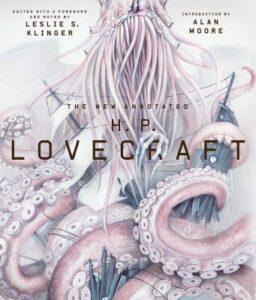
Lovecraft was an early 20th century American author who primarily wrote short stories featuring indescribable horrors—such as the elder god Cthulhu and the mysterious Necronomicon—that have seeped into popular culture as a whole.
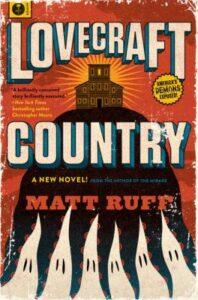 Lovecraft Country by Matt Ruff
This collection of linked stories takes a lot of inspiration not just from H.P. Lovecraft, but also from early 20th century pulp fiction as a whole, while at the same time providing valuable social commentary on both Jim Crow-era America as well as the pervasive racism in H.P. Lovecraft’s writings. The book was adapted into a television series of the same name in 2020, and a sequel novel titled The Destroyer of Worlds came out in 2023.
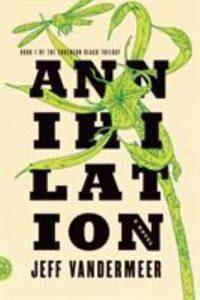 Southern Reach trilogy by Jeff VanderMeer
A series of weird science fiction novels that revolves around an anomalous Florida wilderness, the scientists and shadowy government agencies that study it, and the effect that the zone (and the things that live inside it) have on them. The first novel was adapted into a film starring Natalie Portman.
Shelby S.